Twenty years on, 55 million more people go hungry: African faith leaders demand reparations from the Gates Foundation
- Published:
Twenty years on, 55 million more people go hungry: African faith leaders demand reparations from the Gates Foundation
625 faith leaders from more than 20 African countries call on the Gates Foundation to take responsibility for a failed synthetic farming model, and to redirect its funding to the smallholder farmers, soils and seeds it has harmed.
African faith leaders today called on the Bill & Melinda Gates Foundation to pay reparations for two decades of funding an industrial, input-intensive, so-called "Green Revolution" in Africa that has failed to reduce hunger.
The Open Letter: African Faith Leaders Demand Reparations from the Gates Foundation, signed by 625 faith leaders and 360 supporting organisations and partners, was delivered to the Foundation on 28 October. It was launched today at an online press conference hosted by the Southern African Faith Communities' Environment Institute (SAFCEI).
It comes as the Alliance for a Green Revolution in Africa (AGRA), founded by the Gates and Rockefeller Foundations in 2006, marks its 20th year. Since its launch AGRA has received well over US$1.5 billion, about two-thirds of it from the Gates Foundation.
"The Green Revolution promised to halve hunger. Instead, 55 million more people in AGRA's focus countries are going hungry today than when it began," said Francesca de Gasparis, Executive Director of SAFCEI.
"When a strategy fails this badly, for this long, continuing to fund it perpetuates harm. We are calling on the Gates Foundation to take the independent research seriously and change its approach," de Gasparis added.
Five years of asking
African faith leaders first wrote to the Gates Foundation in 2021, calling on it to stop funding Green Revolution programmes. SAFCEI met Foundation representatives afterwards, but the Foundation has not provided a meaningful response. The campaign has since renewed its call and continued its public advocacy.
The faith leaders speaking at today's press conference are part of a high-level regional delegation that includes leaders from Liberia, Kenya, Botswana, Namibia, Malawi, Zimbabwe and South Africa. The letter's signatories span more than 20 countries across West, East and Southern Africa.
"Across Southern Africa, we are working to correct the wrongs caused by AGRA, helping farmers understand their seed rights and pressing parliaments to protect those rights, not to pass restrictive seed laws as many countries have done," said Gorata Ramokgothwane, a representative of the Botswana Council of Churches.
The evidence: a model that fell short at every step
AGRA set out to double yields and incomes for 30 million farming households and halve food insecurity by 2020. Research published by Tufts University in August 2026 uses 18 years of UN Food and Agriculture Organization (FAO) data to show how far it fell short:
- Hunger rose instead of halving. The number of undernourished people in AGRA's 13 focus countries rose 58%, from about 95 million to 150 million: 55 million more people.
- Yields grew more slowly than before. Staple crop yields grew 1.2% a year, below the 1.3% a year recorded in the 12 years before AGRA began.
- Growth came from clearing land, not farming better. Maize production rose 139%, mainly because land planted to maize grew 71%. Maize yields per unit area rose 40%, far short of the promised doubling.
- More fertiliser, little return. Fertiliser use more than doubled, while yield growth slowed.
- Resilient, nutrient-rich indigenous crops pushed aside. Millet and sorghum, nutritious and drought-tolerant staples, fell from 25% to 17% of cropland. Millet production fell 27% and millet yields fell 17%.
Senegal, which was not an AGRA focus country, shows another way forward for Africa. The same Tufts research found that Senegal halved its number of undernourished people while using about half as much fertiliser per hectare as the AGRA countries.
"The evidence is clear. More than a billion dollars has been spent, soils have been degraded, and more Africans are hungry in the countries AGRA set out to help. The Green Revolution was never the answer for Africa's farmers. That funding must now move away from corporate input supply chains and into community-governed agroecology and soil restoration," said Tolbert Thomas Jallah Jnr, Board Chair of the Alliance for Food Sovereignty in Africa (AFSA).
Women, seeds and climate resilience
Women smallholder farmers grow much of Africa's food, and they carry the heaviest cost when commercial seeds and fertilisers must be bought every season. When input prices surge or harvests fail, smallholder farmers can fall into debt. Restrictive seed laws, including regional rules promoted through SADC and COMESA with AGRA's support, also threaten the practice of saving and sharing traditional seeds, which women have safeguarded for generations.
"Seeds are life. Women have kept them, shared them and fed their families with them for generations," said Josephina Ngishoono of the Namibia Council of Churches..
"A model that forces women to buy seeds and chemicals every season takes away their independence and their families' nutrition. Faith communities are answering with seed banks and seed fairs, so that women stay in control," Ngishoono added.
The faith leaders also question whether the Gates Foundation's latest climate commitments address the root of the crisis.
"We are concerned that the Gates Foundation's announcement at COP30 in 2025 of a further US$1.4 billion commitment continues this trend of funding for corporate gains, not the African small-scale farmer. It leans on digital weather alerts, new commercial seed varieties and bio-inputs that farmers must keep buying. That is the same model in new packaging. You cannot solve an ecological crisis caused by synthetic fertilisers and monocultures with a mobile phone app," said Hassan Omari Kinyua of the Africa Faith Actors Network for Climate Justice in Kenya.
"Real climate adaptation means healthy soils, mixed crops and seeds that farmers have adapted to their own land over generations. That is what survives drought, and that is what deserves investment," Kinyua added.
The demands
The high-level faith leaders are asking the Foundation to meet them before it makes its funding decisions for 2027, and to respond publicly to the research findings. They want to discuss the findings, set out proposed solutions and explore how the Foundation can move its investments towards African-led agroecology.
The letter calls on the Foundation to:
- Cease all funding and programmatic support for AGRA and similar initiatives that promote industrial agriculture in Africa.
- Make reparations for the documented ecological and social damage caused by these interventions, through support for small-scale farmers, indigenous practices and climate resilience measures.
- Transition investment towards genuinely sustainable, inclusive and equitable food systems, primarily by supporting the African agroecology movement and locally defined knowledge systems.
"Success won't be measured in the number of farmers 'reached' while money continues to flow to the same failed approach. It will be measured by whether faith leaders who represent their communities are listened to, whether smallholder farmers' knowledge is recognised and they finally have a seat at the table where decisions about their future are made, and whether the money changes direction to support them," said Gabriel Manyangadze, Food and Climate Justice Manager at SAFCEI.
Click here to view the French version of the press release, and here to view the open letter.
Message of support from Ms. Sofía Monsalve Suárez, Special Rapporteur on the right to food.
Who we are
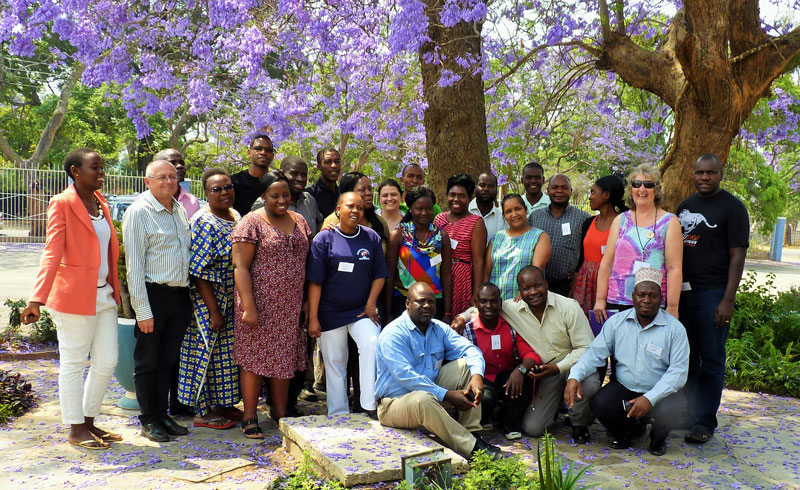
SAFCEI (Southern African Faith Communities’ Environment Institute) is a multi-faith organisation committed to supporting faith leaders and their communities in Southern Africa to increase awareness, understanding and action on eco-justice, sustainable living and climate change.
Featured Articles
-

South Africa: Who Ends Up Paying If DMRE Cooks the Price of Nuclear Power?
-
South Africa’s nuclear energy expansion plans continue to draw criticism, environmental NGOs chew over legal challenge
-
Earthlife Africa and SAFCEI respond to latest unsettling nuclear news regarding the ministerial determination
-
Open Wing Alliance Africa (Virtual) Summit 2023
-
The Green Connection and SAFCEI respond to energy minister's divisive and deflecting comments
-

Job Vacancy: FLEAT Coordinator